There is a chair in Westminster Abbey that, for most of the last seven hundred years, has been the most politically consequential piece of furniture in Europe. It was made on the order of King Edward I around 1300, by the carpenter Walter of Durham, who was paid to enclose a particular block of yellow sandstone weighing 152 kilograms. The chair is oak, dark with age, gilded once but mostly bare now, and scarred in a hundred places by the names of Westminster schoolboys and ordinary visitors who carved themselves into it during the 18th and 19th centuries when the Abbey was a more relaxed place than it is today. By any honest description it is a battered piece of medieval furniture.
The chair is not the point. The chair was built to house something else.
Underneath the seat, originally on a wooden ledge cut to receive it, sits the Stone of Scone. Sometimes called the Stone of Destiny. The size of a small suitcase. It looks, more than anything else, like a step. And the more time spent with its history, the harder it becomes to escape the conclusion that the entire architecture of British monarchy has been organised, for seven hundred years, around the question of where this stone is sitting at any given moment.
It is an object anyone can walk up to and look at. Geologists have determined it was quarried in Perthshire. Historians have established that its first documented use as an inauguration stone was the enthronement of the boy-king Alexander III at Scone in 1249. It has been scanned, photographed, weighed, and described in academic monographs that run to several hundred pages. And underneath all of this respectable scholarship, the stone has continued to do something it should not, by any rational accounting, be capable of doing. It has continued to determine who has the right to a throne.
This is the part that resists being explained away. The geology has not changed it. The X-rays have not changed it. The repeated demonstration that the legends are not literally true has not changed it. In May 2023, this 152-kilogram piece of Scottish sandstone was transported under heavy security from Edinburgh Castle to Westminster Abbey, slid beneath an oak chair, and a man sat down on it and was crowned King of the United Kingdom of Great Britain and Northern Ireland. The cameras of the world were on him. The stone was where it needed to be for the thing to be real.
The Story That Will Not Die
For many centuries, the legend attached to the Stone of Scone has been that it is the same stone on which the patriarch Jacob rested his head at Bethel when he dreamed of a ladder reaching to heaven. Genesis 28. Jacob took the stone, set it up as a pillar, poured oil on it, and called the place the gate of heaven.
The stone the British have been crowning their monarchs on, the legend says, is that stone. Carried out of the Holy Land. Brought to Egypt. Then Spain. Then Ireland. Then Scotland. Then, by Edward I in 1296, to England.
The geology rules this out entirely. The Stone of Scone is local Perthshire sandstone. As the British archaeologist David Breeze has put it, Jacob’s pillow would have been Levantine limestone, the bedrock of the Holy Land. Anyone with a basic acquaintance with petrology can dismiss the claim in under a minute. And yet the legend, demonstrably false in every literal sense, has been impossible to kill. It survived the Reformation. It survived the Enlightenment. It survived the development of modern geological science. It is still printed in the visitor literature at Westminster Abbey today.
The answer that emerges from a long look at the evidence is that the legend is not a claim about geology. It is a claim about jurisdiction. By tying the stone to Bethel, the British coronation ritual was attempting to inherit, by a sort of mythic adoption, the most contested piece of sacred geography in the entire western religious imagination. The stone did not have to be Jacob’s pillow for the claim to function. The claim itself was the work being done.
That is the part that is hard to look at directly. The educated assumption is that legitimacy flows from elections, from laws, from documents, from institutions. Look at the Stone of Scone for any length of time and something older and more honest starts to show through. Legitimacy, in the way human beings have actually organised it across most of recorded history, has flowed from the possession of specific objects. The legitimate ruler is the one whose hand is on the right stone, the right sword, the right tablet, the right relic. Not metaphorically. Literally.
A Brief Inventory
Once the pattern becomes visible, the inventory becomes uncomfortable.
Otto I carried the Holy Lance into battle at Lechfeld in 955 and credited his victory to it. The same lance, dated by metallurgical analysis to the 7th or 8th century and therefore demonstrably not the Roman spear of the crucifixion, sat at the centre of Holy Roman Imperial coronation rituals for nine hundred years. It currently sits in a glass case at the Hofburg Palace in Vienna. In October 1938, immediately after the Anschluss annexed Austria, Adolf Hitler ordered the lance and the rest of the imperial regalia transferred from Vienna to Nuremberg, where the Nazi regime presented them as symbols of their claimed continuity with the Holy Roman Empire. American forces recovered the lance in 1945; the actual recovery was carried out by Lieutenant Walter Horn of the Monuments, Fine Arts, and Archives Program, and the lance was returned to Vienna. The popular story that Hitler started the war to obtain the lance for occult reasons comes from a 1973 book by Trevor Ravenscroft and is treated by serious historians as essentially fictional. The political motivation, which was about legitimacy through Imperial succession, was sufficient on its own to explain his interest.
On 4 July 1187, a Crusader army was destroyed at the Horns of Hattin in what is now northern Israel. King Guy of Lusignan was captured. So was a relic of the True Cross, carried into the battle by the Bishop of Acre. The military catastrophe was severe. The loss of the relic was, in the contemporary chronicles, worse. Pope Gregory VIII called the Third Crusade specifically in response to it. Richard the Lionheart and Philip II of France crossed the Mediterranean for the explicit purpose of recovering both the city and the fragment of wood. Both efforts ultimately failed. The fragment vanished from history. The mobilisation it triggered shaped European politics for the next two centuries.
On Friday 13 October 1307, in one of the most operationally sophisticated mass arrests in medieval history, agents of King Philip IV of France detained approximately two thousand Knights Templar across France in a single coordinated day. The order was prosecuted, suppressed, and dissolved by 1312 through the papal bull Vox in excelso. Grand Master Jacques de Molay was burned at the stake in Paris in 1314. The standard historical reading is that Philip wanted their wealth; he was deeply in their debt. The deeper reading, which more recent scholarship has developed, is that he wanted to break the religious-political mechanism the order represented. The Templars had spent two centuries acting as the principal European custodians of the sacred infrastructure of Christendom: relics, properties, knowledge of the Holy Land itself. Bringing that infrastructure under royal rather than ecclesiastical control was the long political project the heresy charges concealed.
The list extends. The Ark of the Covenant in the Hebrew Bible, fought over for centuries, last seen entering Solomon’s Temple before disappearing from the historical record during the Babylonian destruction of 587 BCE. The Black Stone in the eastern corner of the Kaaba, touched and kissed by pilgrims for fourteen centuries and the subject of repeated theft and recovery operations across Islamic history. The relics of the Three Magi, transferred from Milan to Cologne Cathedral in 1164 on the order of Frederick Barbarossa, where they have remained ever since and where the cathedral itself was built, beginning in 1248, on a scale specifically designed to accommodate the pilgrims they would draw. The Shroud of Turin. The Sacred Tooth Relic at Kandy, which determined Sinhalese kingship in Sri Lanka for over a thousand years and is still ritually honoured in a July or August procession that parades a replica casket through the city.
The pattern is consistent enough across cultures and centuries that calling it a pattern feels almost too soft. It is closer to a principle.
The Object as Memory Device
What makes the Stone of Scone particularly useful, more than any of these other cases, is that its modern history is so well documented that the underlying mechanism becomes visible in a way it does not in the more legendary examples. The machinery is still working in real time and can be watched.
In 1996, the British government returned the stone to Scotland. The decision was made by John Major’s government for reasons that were ostensibly conciliatory. It was a gesture of recognition. The stone, after seven hundred years, was going home.
It went under heavy security to Edinburgh Castle, where it sat in a chamber next to the Scottish crown jewels for twenty-eight years. In 2024 it was moved again, to a newly built museum in Perth, on the explicit reasoning that it should be returned to the area where it had originally been quarried. The museum opened in March 2024 with the stone as its centrepiece. In July 2025, a visitor attacked the display case with a hammer. The stone itself was unharmed but the case was badly damaged, and the exhibit was closed for several months before reopening in October. The man, a French national who had been living in Australia, was charged with malicious mischief but is believed to have since left the country.
While all of this was happening, Professor Sally Foster at the University of Stirling was patiently tracking down the fragments. When the stone was stolen by Scottish nationalists in 1950 and broken in two during the theft, a Glasgow stonemason named Bertie Gray repaired it. In the course of the repair, Gray kept and distributed approximately thirty-four small fragments. One went to a visiting Australian tourist named Catherine Milne, and after her death in 1967 her family donated it, along with Gray’s signed letter of authentication, to the Queensland Museum in Brisbane, where it remains. A separate fragment, which Foster’s research links to a nineteenth-century geological sample rather than to Gray’s repair, was incorporated by the Australian coachmaker Jim Frecklington into the Diamond Jubilee State Coach, which the Australian government donated to Britain in 2013. King Charles III and Queen Camilla rode in that coach to Westminster Abbey for his coronation in 2023, with the fragment mounted behind a small glass window beneath their seats.
This is the part that resists tidy explanation. The stone is not, in any meaningful chemical sense, special. It is Perthshire sandstone, no different from countless thousands of tons of the same material that have been quarried, used for steps and walls, and forgotten. But once a piece of it has been declared sacred by the right ritual, the fragments of it begin to behave like a different category of matter. They cannot be casually discarded. They cannot simply become gravel. They sit in museum cases on the other side of the planet, donated by the families of people who could not bring themselves to throw them away.
That is what a sacred object is, when stripped down to its working parts. It is not the object that is sacred. It is the human refusal to treat it as ordinary.
What We Are Doing Now
The temptation, having walked this far through the history, is to land somewhere conspiratorial. Hidden modern operations, secret programmes. Some of that is real. Most of what gets written about it is not, and adding to the noise serves no one.
What can be said honestly is this. The instruments available for identifying, dating, scanning, and authenticating ancient objects are an order of magnitude more powerful than anything previous generations possessed. Mass spectrometry, neutron tomography, isotope sourcing, AI-driven manuscript reconstruction. A fragment of wood, a piece of carved stone, a sheet of bronze can now produce a chemical and historical biography that would have been unimaginable in 1990.
The same period has seen the development of remote survey at unprecedented resolution. Satellite-based ground analysis can identify the signatures of buried structures across whole regions. Magnetometry can map subsurface anomalies without putting a shovel into the soil. The infrastructure to do this work has, for reasons that are not difficult to understand, accumulated in institutions that do not publish most of what they find. The Vatican renamed its Secret Archives to the Apostolic Archive in 2019; access policies for restricted holdings are governed separately and most material dated after 1958 remains closed to outside scholars. Most national archaeological survey programmes remain considerably less open. Private foundations with quiet intelligence-adjacent funding operate at a scale the public is largely unaware of.
This is not an extrapolation to anything dramatic. It is the modest observation that if the historical pattern holds, and the principle of legitimacy through object-possession has not stopped operating, then somewhere in the back rooms of institutions whose names the public might or might not recognise, decisions are currently being made about objects whose existence has not been announced.
The Question the Stone Will Not Answer
Recent geological analysis of the Stone of Scone has produced a finding that is harder to forget than to think about. The pattern of wear on the upper surface does not match what would be expected from centuries of kings stepping onto it during inauguration ceremonies. The wear is heavier and more uniform than ritual use would produce. As Dr Nicki Scott of Historic Environment Scotland has noted, even several hundred years of inauguration ritual would not create the level of wear that is actually visible on the stone. The most plausible interpretation is that the stone was used as something else first. A step in a building, possibly a Roman structure. Possibly a church. Generations of ordinary feet on ordinary stone, before someone, at some unrecorded moment, decided that this particular block of sandstone was now the seat of kings.
We do not know who made that decision. We do not know why. We only know that, once it was made, the stone became impossible to demote.
The honest position, after all this, is one of partial understanding. The political mechanism makes sense. The cognitive mechanism makes sense. Legitimacy in human civilisation has always required physical anchors and controlling the anchors has always been a form of power. But there is a residue that does not fully dissolve. Something about the persistence of the legend, about the refusal of the fragments to become ordinary, about the way Charles III had to wait until the stone arrived from Edinburgh before the coronation could proceed.
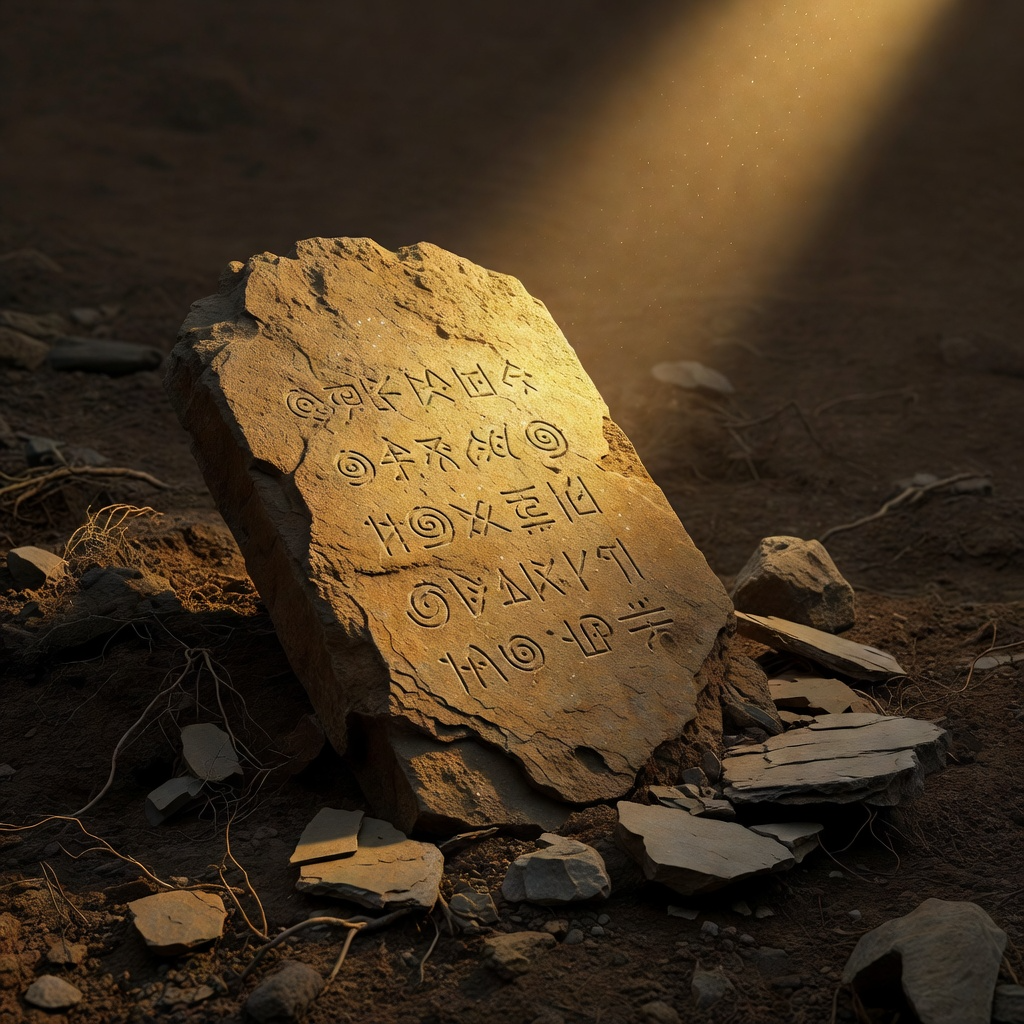
For readers who find that residue interesting, that is also the territory of Homecoming, a novel that opens with a Russian intelligence team excavating a four-thousand-year-old stone tablet from a sealed underground vault on the edge of the West Bank. A NASA scientist is independently watching his instruments flag a signal from a hilltop nearby. A Palestinian family is being pulled toward the same ridge by an instinct they cannot explain. The tablet they have just removed from the ground is not the destination of the story. It is, like so many of the objects history has been organised around, a pointer toward something else.
Some books explain the world. Homecoming asks what the world has been quietly arranging itself around for the last four thousand years, while the rest of us were looking somewhere else.